
How Sputnik Created the Internet
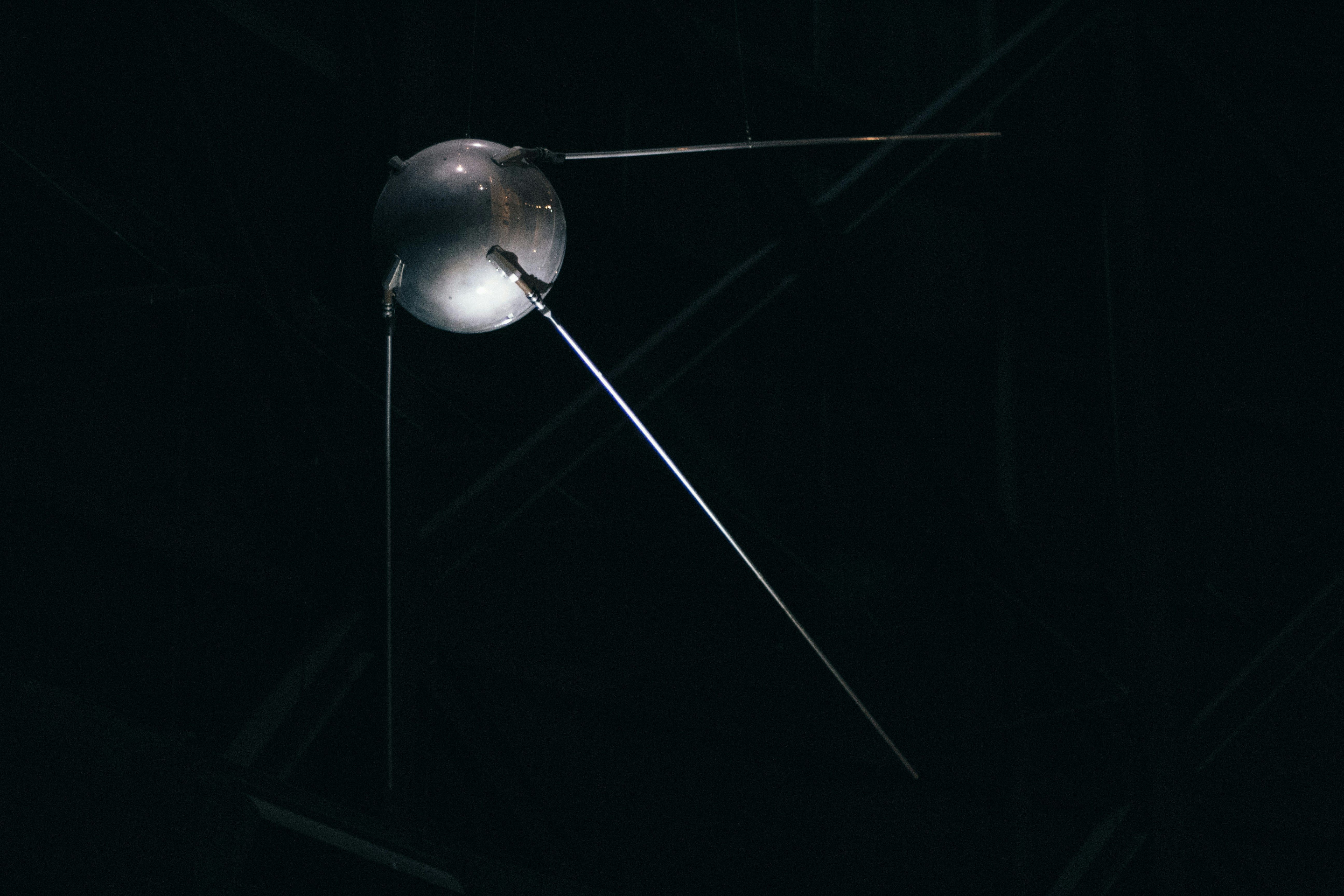
On October 4, 1957, the Soviet Union launched Sputnik 1 into orbit. It was a shiny metal sphere with four antennas that orbited Earth and beeped.
And that really fucked us up.
In response, the United States did all kinds of things, including creating its own satellites and dramatically increasing STEM education funding through the National Defense Education Act. Nothing like the existential threat of nuclear war to get you to take education seriously, I guess.
One of the responses to the Sputnik launch was to create the Advanced Research Projects Agency (ARPA). ARPA was designed to fund high-risk, high-reward research on the cutting edge of technology. Rockets. Missile defense. Space systems. All kinds of crazy stuff.
Computers were not the original focus of ARPA. But by the early 1960s, they were becoming hard to ignore. Military command and control systems increasingly depended on computers for things like the Minuteman I Missile Guidance or the Naval Tactical Data System, which shared tactical data among warships in real time.
So computers quickly became relevant to national defense, and ARPA began funding computer research at universities and research labs across the country. Meanwhile, Cold War planners were asking the cheerful hypothetical question: what happens if a nuclear strike destroys our communications network?
The need for distributed communication that could survive disruption, combined with a desire to connect a growing research ecosystem, led the Advanced Research Projects Agency to create ARPANET in 1969, the first large-scale "packet-switched" network, where messages were split into small packets that traveled independently across the network before being reassembled at their destination.
ARPANET was not alone. The UK’s NPL network and France’s CYCLADES network explored similar approaches.
As more independent networks emerged, the need for shared communication standards became apparent. That led to TCP/IP, developed in the 1970s and officially adopted by ARPANET in January 1983. TCP/IP allowed separate networks to interconnect into a “network of networks”—an “internet,” if you will. With that transition, ARPANET stopped being a standalone experiment and became just one network within what we now call the Internet. ARPANET itself was formally decommissioned in 1990.
ARPA, now DARPA (Defense Advanced Research Projects Agency), still exists. It continues funding advanced research in artificial intelligence, cybersecurity, robotics, and all that good stuff. The mission remains largely unchanged: make sure the United States is never again caught with its technological pants down.
The team at /dev/null Digest is dedicated to delivering human-written commentary, humor, satire, and insights about software development and the tech world. Have opinions to share? Interested in writing your own articles? We are always accepting submissions, so feel free to reach out.
Related Posts



By posting you agree to our site's terms and conditions , ensuring that we can create a positive and respectful community experience for everyone.